The Costs of War: Iran Charges $2 Million Toll for Ships Passing Through Strait of Hormuz
Amid rising tensions in the Middle East, Iran has introduced a new policy that requires some ships to pay a $2 million transit fee to pass through the Strait of Hormuz. The decision comes during the ongoing conflict involving Iran, the United States, and Israel, and reflects Tehran’s attempt to use its strategic control over one of the world’s most important shipping routes.
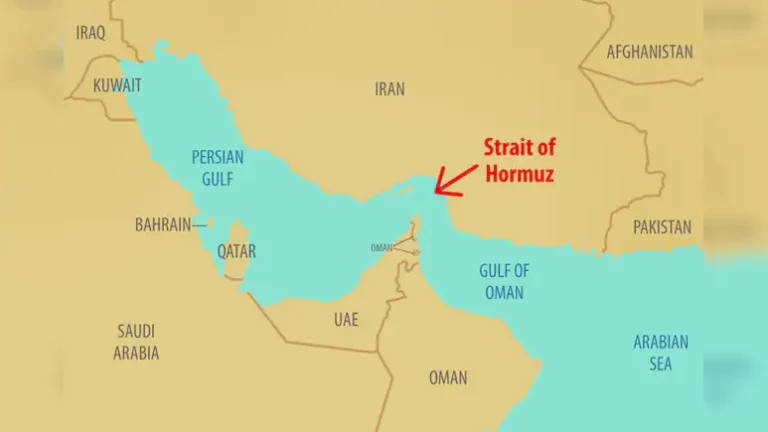
The Strait of Hormuz is a narrow waterway connecting the Persian Gulf to global sea routes. Around one-fifth of the world’s oil supply passes through this route every day, making it a vital artery for global trade and energy transport. Because of its importance, any disruption or new rule in the strait can affect oil markets and international shipping.
According to Iranian lawmaker Alaeddin Boroujerdi, the new toll has already been implemented. Boroujerdi, who is a member of Iran’s parliament national security committee, said the move reflects a new “sovereign regime” over the waterway. He explained that Iran has the right to charge transit fees and described the decision as a demonstration of the country’s authority.
“War has costs,” Boroujerdi said while explaining the policy. According to him, charging ships a transit fee shows Iran’s strength and control over the strategic route.
The move comes shortly after a strong warning from Donald Trump, who said the United States could target Iran’s power infrastructure if the strait was not reopened for normal shipping. Trump warned that American forces could strike Iran’s power plants if the waterway remained restricted.
In response, Iran’s president Masoud Pezeshkian said that the strait is “open to everyone” except countries that threaten Iran or violate its territory. In a message posted online, he emphasized that threats would only strengthen Iran’s unity and resolve.
Iran has also warned that if the United States attacks its infrastructure, the Strait of Hormuz could be completely closed, which would have serious consequences for global energy supplies. Because so much of the world’s oil moves through the route, any disruption could push oil prices higher and create economic uncertainty worldwide.
For now, Iran says the waterway remains open to most countries. However, the new toll policy and rising tensions show how strategic control over the Strait of Hormuz can quickly become a powerful tool during geopolitical conflicts.
Headlyne app makes sure that as soon as a headline is created, it reaches straight to your phone without wasting any time! Stay curious and informed with us.
Download the Headlyne app today.