
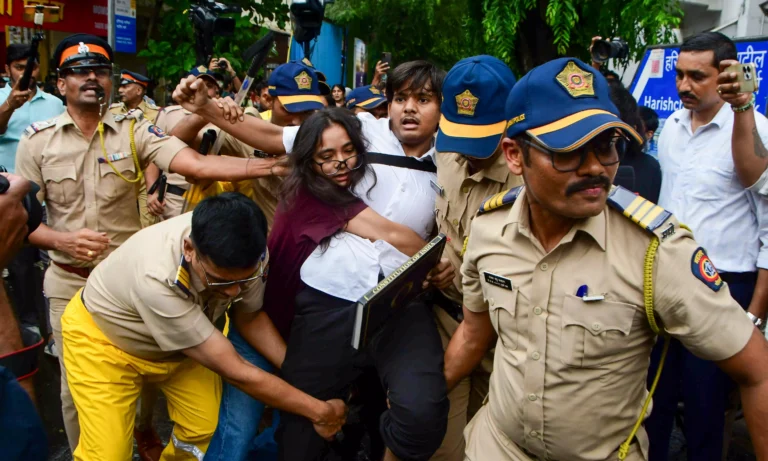
What began as online outrage over exam leaks has spilled onto the streets of Delhi — and it shows no signs of stopping.
Since June 6, 2026, the Cockroach Janta Party (CJP), a youth-based satirical political movement, has been holding a series of protests at Jantar Mantar in New Delhi alongside student organisations including the Students Federation of India, All India Students Association, and All India Students Federation. The protesters have demanded the resignation of Union Education Minister Dharmendra Pradhan over the 2026 NEET paper leak and CBSE On-Screen Marking irregularities, along with broader reforms in the conduct of public examinations.
What Sparked the Jantar Mantar Protest?
The protests followed two examination-related controversies in 2026 — an alleged question paper leak affecting the NEET-UG medical entrance examination, and irregularities in the CBSE’s On-Screen Marking and revaluation process, which left thousands of students awaiting clarity on their final results. For lakhs of young Indians who had spent years preparing for these exams, the leaks weren’t just a procedural failure — they felt like a personal betrayal.
This Protest Is Different
Previous student movements were often contained through identity-based vilification — protesters painted as anti-national, Khalistani, or urban Naxals. This protest is harder to dismiss. The students represent mainstream aspirational India — job seekers, medical aspirants, and urban professionals cutting across caste, religion, and region. They have been explicitly non-violent, carrying national flags and books as symbols of their right to education and equal opportunity.
Thousands of youth activists have staged a massive showdown, attempting to march toward Parliament, with Delhi Police placing heavy barricades and political leaders scaling those barricades to join the sit-in.
For over a month, the government refused to send a single minister or official to engage with the protesters. That silence has only amplified the anger. The movement has now grown beyond its original demand — it is no longer just about one minister’s resignation. It is a broader reckoning with institutional decay, systemic corruption in public examinations, and a generation’s eroding trust in the system meant to serve them.
India’s youth are no longer just tweeting their frustration. They are marching to Parliament’s doorstep — and demanding to be heard.
Headlyne app makes sure that as soon as a headline is created, it reaches straight to your phone without wasting any time! Stay curious and informed with us.
Download the Headlyne app today.